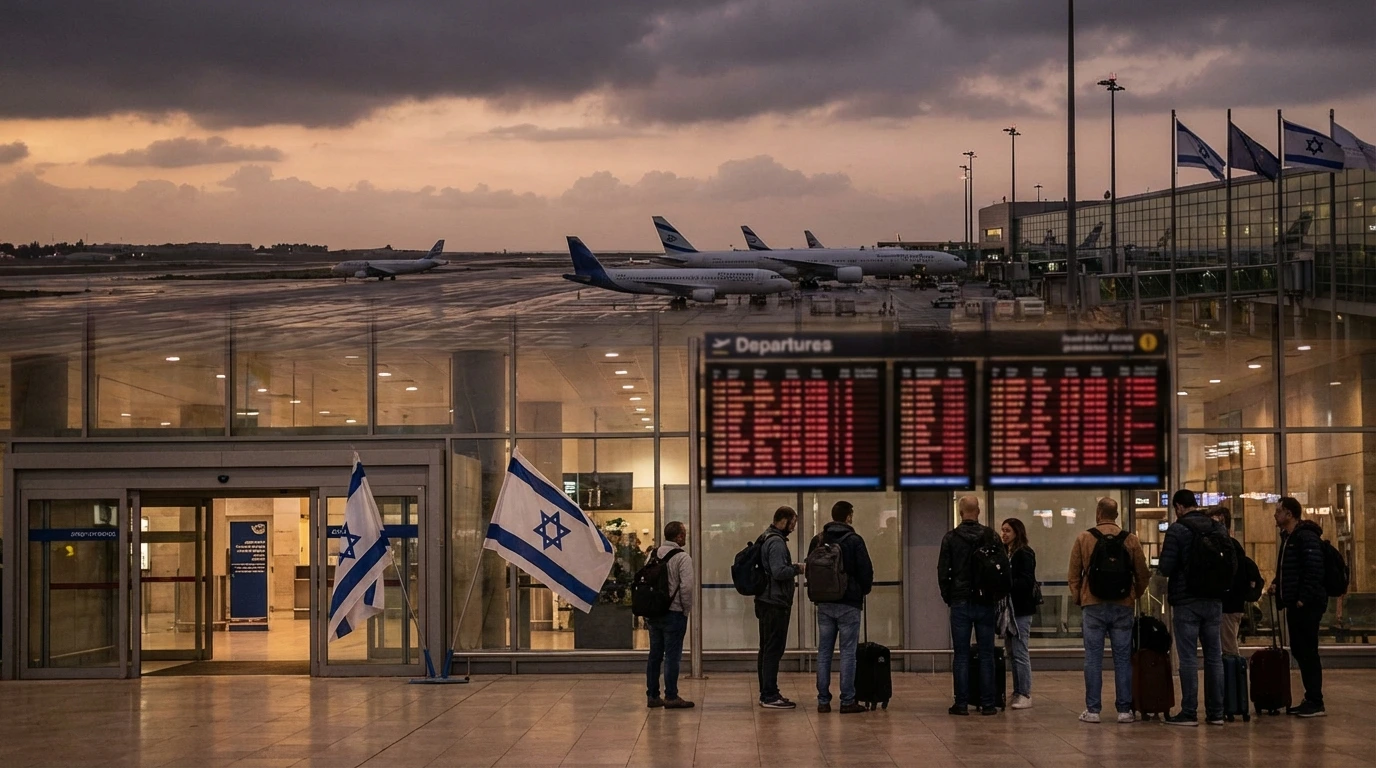

Dutch airline **KLM** has suspended all flights to and from **Israel**, citing unresolved security risks in the region, the carrier confirmed late Friday. The cancellations affect scheduled service through the coming weeks and have left thousands of passengers scrambling for alternatives as tensions in the Middle East reverberate through commercial aviation.
In an official statement, the airline said it was acting “out of an abundance of caution” after assessing evolving conditions that could impact the safety of crew and passengers. “We have made the difficult decision to temporarily cancel our flights to Tel Aviv and other Israeli airports until further notice,” the company said.
### Flight Disruptions and Passenger Impact
KLM’s suspended routes include its flagship Amsterdam Schiphol–Tel Aviv service, a major connection between Western Europe and the Eastern Mediterranean. KLM advised affected customers that it is offering refunds, rebooking options on alternative routes, or travel credits. Many travellers, however, report long waits for customer service responses and limited rerouting availability as carriers across Europe adjust their schedules.
Online flight tracking data shows a sudden drop in inbound and outbound traffic between Schiphol and Ben Gurion Airport after the announcement. Airlines monitor security not only for physical threats but also for surge risk — the likelihood that sudden escalation in conflict zones can overwhelm airport infrastructure and crew operations.
### Broader Aviation and Security Context
KLM’s decision comes amid a broader retrenchment by international carriers operating in and around Middle Eastern airspace. European carriers including Lufthansa and Air France have already adjusted Israeli schedules in recent days due to airspace restrictions and growing risk assessments issued by aviation authorities.
The **European Union Aviation Safety Agency (EASA)** has urged airlines to review operations and avoid routes that overfly zones assessed as unstable. Similarly, several national civil aviation authorities have issued advisories recommending risk mitigation measures for carriers and passengers.
### Strategic and Economic Signals
Commercial airlines rarely suspend service to a sovereign destination absent clear risk indicators. KLM’s move signals both an operational caution and an economic hit. Flights to Israel carry not only passengers but cargo that forms part of wider European–Middle Eastern trade flows. Disruption to these routes raises short-term costs for freight clients, from high-value technology components to perishable goods.
From a strategic perspective, the suspension increases pressure on aviation insurers and risk modelling firms, which must now reassess premiums for routes in and around the Eastern Mediterranean. Higher insurance costs could linger even after security conditions stabilize, as carriers factor geopolitical risk into network planning.
### KLM’s Statement and Next Steps
In its announcement, the Dutch carrier emphasized that the safety of passengers and crew is its “top priority.” KLM said it is in “constant dialogue” with aviation authorities, security consultants, and partners in the broader airline alliances to determine when and how flights might resume.
A spokesperson added that any resumption of service would be conditional on updated risk assessments and clearances from both Dutch and European regulators. This approach aligns with procedures adopted by other carriers in recent years when operating near active conflict zones.
### Implications for Travel and Diplomacy
KLM’s suspension may have ripple effects beyond the aviation sector. Israel is a significant destination for business travel, religious tourism, and academic exchange; reduced connectivity could dampen economic activity. Moreover, the move underscores how geopolitical tensions can rapidly translate into commercial and logistical barriers.
European governments have so far stopped short of issuing blanket travel bans for their citizens, but individual advisories now emphasize heightened caution. Travel advisory updates from multiple EU member states cite security risks near border zones and note that insurance coverage may be voided if travellers enter high-risk areas.
For passengers already in Israel, the cancellations have created an acute dilemma: whether to remain in place and seek alternative transport or attempt last-minute reroutes through secondary hubs in the Middle East or Mediterranean. Some travellers have reported difficulty securing seats with other carriers, while others are exploring overland options to nearby countries with more stable air links.
### What to Watch Next
**Airspace and risk advisories:** Civil aviation authorities across Europe and the U.S. will continue updating guidance. A downgrade or removal of advisories could prompt a phased return of scheduled flights.
**Insurance pricing:** Risk categorization affects insurance premiums for airlines and could influence longer-term network decisions.
**Diplomatic engagement:** Governments must balance public safety with commitments to connectivity — a dynamic that could shape European policy on travel advisories and transport coordination in the months ahead.
In an era of rapid geopolitical shifts, KLM’s cancellations are a stark reminder of how fragile global travel networks can be when political uncertainty intersects with commercial imperatives. For now, passengers, regulators, and carriers alike face a period of adjustment that reflects both the risks and responsibilities of international aviation.